The Hearing Voices Network: De-Mystifying Voices and Visions
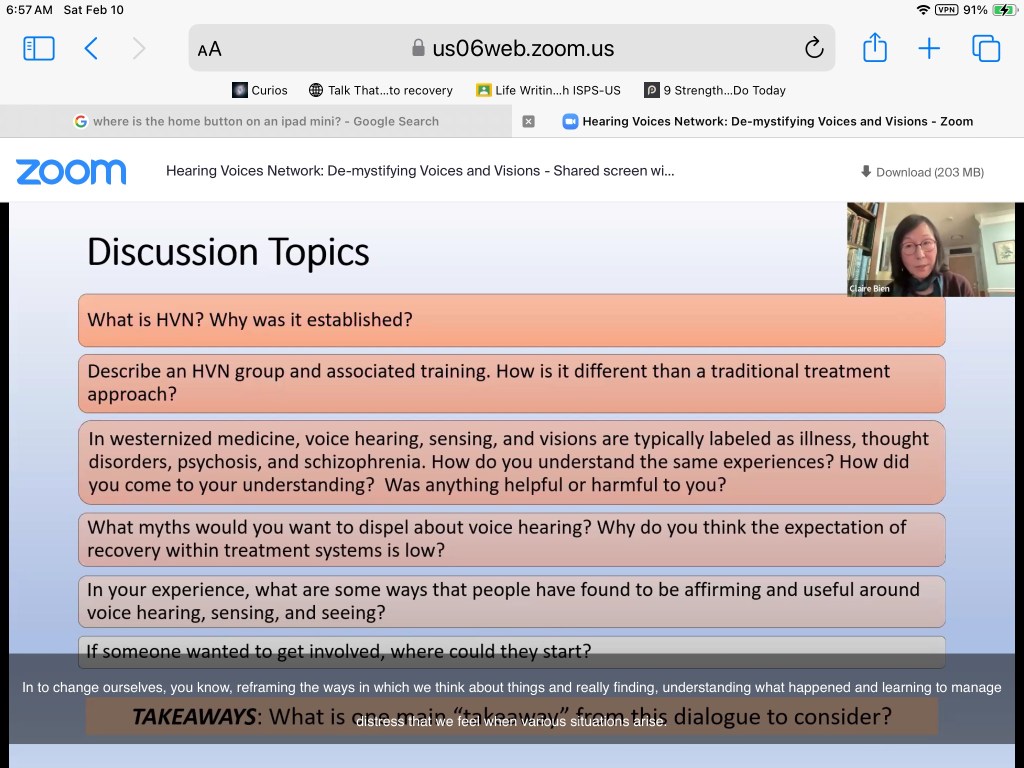
I recently had the pleasure of participating in a webinar with Cindy Marty Hadge, HVN-USA trainer, Intentional Peer Support Trainer, and lead trainer for the Wildflower Alliance Network; and Skye Collins, Coordinator of the Connecticut Hearing Voices Network, and fellow member of the HVN-USA Board of Directors. We had a wonderful conversation and believe we did succeed in dispelling many of the myths surrounding the phenomena of voices and visions.
The webinar was hosted by Jeremy Countryman, Program Director of Cafe TAC, and Cherene Caraco, and CEO of North Carolina’s Promise Resource Network.
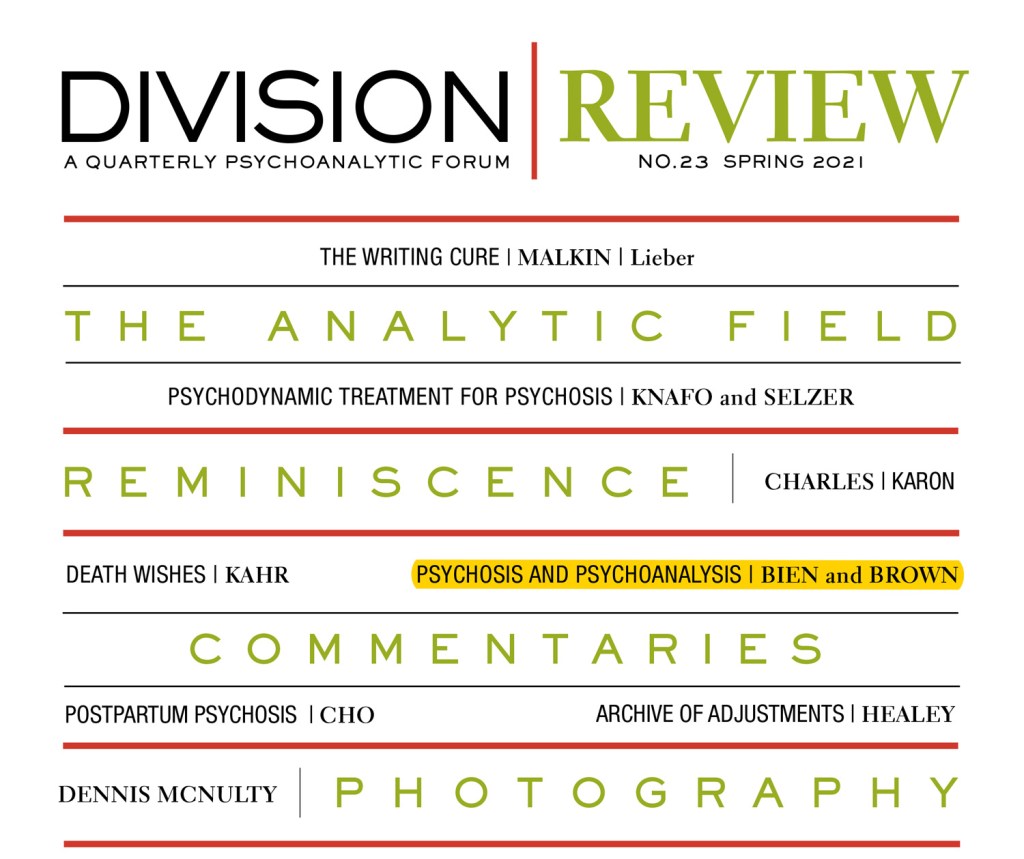
One of the joys of being mostly retired and volunteering way too much is that I have an opportunity to collaborate with amazing young people doing important and often pathbreaking work in the area of Psychosis. Psychologist Marie Brown, vice-president of ISPS-US and the person responsible for my becoming president recently held this “Dialogue” on Psychosis, Psychoanalysis, and the Peer/Survivor Movement, published in April in Division/Review, a journal of the psychoanalytical division of the American Psychological Association. The “dialogue” was in fact a laborious process on my part, entailing many hours of cogitation, writing, and rewriting to ensure that I meant what I wrote and that what wrote conveyed precisely what I wished to communicate.
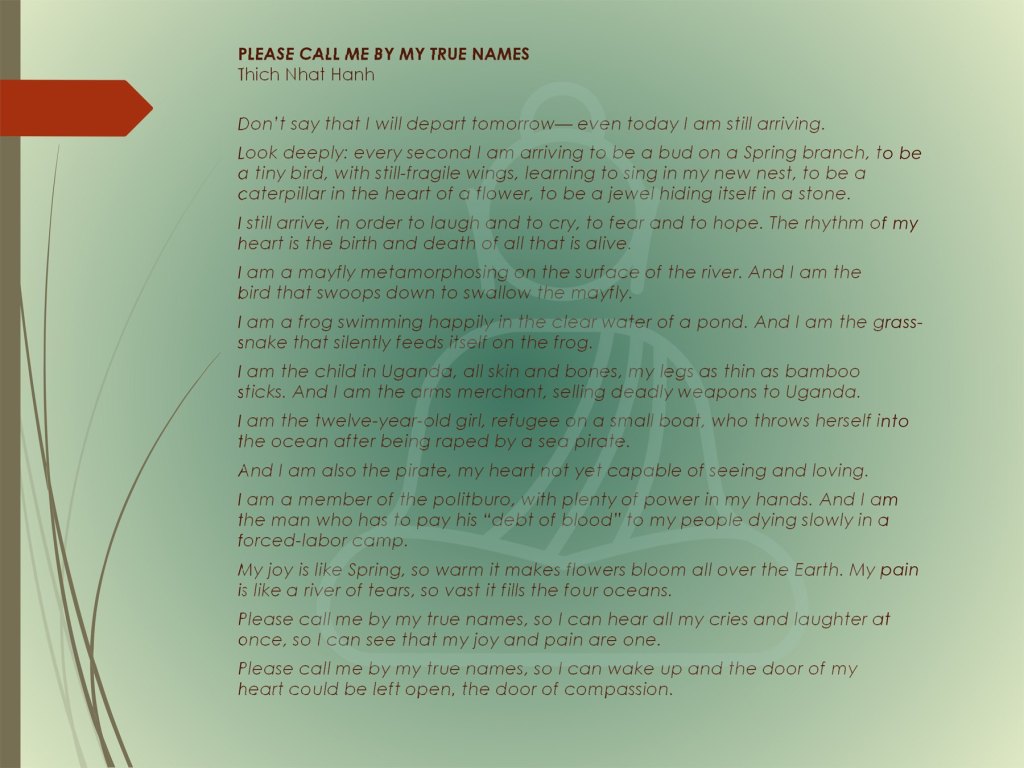
This past January, I participated in a webinar hosted by the Society for the Study of Psychiatry and Culture – with the wonderful Lauren Utter, PsyD, a Harvard-affiliated clinical psychologist who does work in early psychosis, whom I’d met when she was a Post Doc at Yale; and Dr. Francis Lu, a psychiatrist and Emeritus Professor of Psychiatry at UC-Davis. The webinar addressed self-coping and help-seeking pathways for psychosis. My portion was entitled Learning Our Voices’ True Names, inspired by Zen Master, spiritual leader, poet, and peace activist Thich Nhat Hanh’s poem, Please Call Me By My True Names, which captures poignantly and evocatively the beauty, pain, and terror of the human condition—of living and being in the world. Each of us embodies, to some degree, each of the life forms he describes. Each of us has within us that which is innocent, true, and beautiful. And each of us has within us that which can render us the hapless victim, or the predator, or, if we are unlucky, and not careful, the arms merchant, and the sea pirate.
The webinar can be viewed by following this link: zoom_0.mp4 – Google Drive . My portion goes from 23.19 – 51.26 minutes.
This is the presentation I gave at the ISPS-US conference held in New Haven in November, 2019. The theme for conference was Psychosis, Citizenship, and Belonging: Forging Pathways toward Inclusion and Healing.
Last Friday I participated in a webinar hosted by the Mental Health Technology Transfer Center that included my Yale Program for Recovery and Community Health colleagues Ana Florence and Becca Miller, as well as Leslie Nelson, the supervisor for the START (Stabilization, Treatment, and Recovery Team) program, a community-based peer support team of the Howard Center in Burlington, Vermont. You don’t need to download the Adobe Connect software – just click on “open in browser” and when you get a screen with four blank boxes, look at the bottom left corner of the screen and you will see the right arrow that you can click to start the video.
The image on the book cover is a self portrait taken in 1982.
I developed the following for the Hearing Voices Network resource group I started at Yale-New Haven Psychiatric Hospital in December 2014. Many people have told me they found them useful – but for some reason I never thought to post them on this website. I’m doing so now, as I wish to be more active in creating blogs and vlogs for posting here. I’m hoping this list will prompt me to expand on it – something I keep saying I need to do, but just don’t get to. I’ve learned so much — about myself — about my voices — since 2014 thanks to the Hearing Voices Network and ISPS – the International Society for Psychological and Social Approaches to Psychosis. For example, in 2017, I learned at the ISPS International Conference in Liverpool that I am an empath. I’d never heard the time, but as I began reading and cogitating, I began to understand things I’d experienced as a child and adolescent — things that confused and troubled me for a while but because they weren’t permanent, didn’t do any real damage. As I’ve been exploring what it means to be an empath (I recommend Dr. Judith Orloff’s book, The Empath’s Survival Guide). As I continue to explore, I learn new strategies for understanding myself and living in the world, which fosters my resilience and strengthens my recovery.
• Laugh
• Keep doing the things you love, even when some voices mock you for doing them.
• Don’t act on anything the voices tell you (to do) without real-world input
• If you start to get scared, stop listening. Then find someone you trust and talk, play a game, watch a movie, or just hang out. If no one is available, call someone. Later, when you’ve calmed down and it’s convenient, turn back to the voices and consider what they’re saying, and whether it’s correct, or true.
• If you don’t believe what the voices are saying is true, ask questions. Or state your own position. When I have done this, the disagreeable voices always back off—the kind and helpful ones become even more supportive.
• A lot of people, myself included, manage their voices as they manage other relationships—asking the voices to respect their needs and responsibilities to themselves and other people.
• Standing up to the voices can be a very good thing – especially if you know what they’re saying is not trueor if they’re telling you to do things that you know are wrong – that will hurt you or someone else.
• It’s a really good idea to practice standing up to your voices with support—an HVN support group, friends, your therapist. When you have the time, asking the voices questions (e.g., why do they say the things they say to you—why do they hold this or that opinion) can be very helpful. The kind voices often respond in very helpful ways. The negative voices often have nothing to say—so I tend to feel free to dismiss them—and they lose their power over me.
• Kind voices don’t tell you to do things that you know are wrong.
• Trust yourself and what you know to be true.
• Stand your ground –if you speak the truth, the voices can’t argue.
• Be reasonable and respectful, but stand your ground.
• Making an appointment to talk often works.
• The voices often lie. Even the kind ones.
• The voices are fallible.
• The negative voices aren’t omniscient but it often (though not always) seems as if the positive voices are.
I was so pleased and honored–to be part of Beyond Possible: How the Hearing Voices Approach Transforms Lives, produced by the Western Massachusetts Recovery Learning Community. This wonderful film about the Hearing Voices approach first released in 2019. On May 26, I was part of a panel discussion following the” virtual World Premiere” of the film B Organized by the Foundation for Excellence in Mental Health Care, the panel included the amazing Caroline Mazel-Carlton, Terresa Ford, Bill Sorel, and Michael Mansur, and me. Each of us spoke to the ways in which we learned to navigate the mental health system, and what we are doing to help create a more healing and accepting world. The film is wonderful – and includes 10 voice hearers – including the five of us.
The video of the conversation following, with transcript can be viewed by following this link:
This is the transcript.
The HVN-USA Charter states that “the Hearing Voices Movement is a part of a social justice movement that intersects with other movements and marginalized experiences.” Panelists from the American Hearing Voices Movement discuss their diverse experiences with voice-hearing as members of Black, Chinese-American, LGBTQ, Veteran, and Jewish communities, as well as how the Hearing Voices Movement can help to create a more just world.
“Beyond Possible” is a co-production of the Western Massachusetts Recovery Learning Community and Mount Holyoke College, with support from Open Excellence.
Leah Harris: My name is Leah Harris, and I want to provide a visual description of myself. My pronouns are she or they. I am a white feminine appearing person with half-brown, half rose gold hair. Just wanted to provide that description.
I am so very pleased to welcome you all to today’s film screening and virtual panel discussion of Beyond Possible: How the Hearing Voices Approach Transforms Lives, a co-production of the Western Massachusetts Recovery Learning Community and Mount Holyoke College. Whether you’re a voice hearer or someone who loves one, this documentary will broaden your understanding of voice hearing and why Hearing Voices groups and the Hearing Voices movement mean so much.
I’m going to turn it over now to our moderator for today. I’m so pleased to introduce Caroline Mazel-Carlton, who has been a part of the Hearing Voices Research and Development Project, which we’ll talk a little bit more about later, and worked on the creation of the film. Thank you so so much, Caroline, please feel free to take it away.
Caroline Mazel-Carlton: My name is Caroline. My pronouns are she/her and I am a white woman with wavy long brown hair, brown eyes, and my black Trans Lifeline t-shirt on today. But I guess one of the most important things about me are kind of the parts of me that you don’t see, which is the fact that I am a voice hearer. And so oftentimes when I introduce myself, it also feels important to name that that’s a real experience for me happening right now. And talk about some of the voices that I heard today. So I’ve heard from a woman’s voice named Cathy that I hear sometimes over my right shoulder. And also today I’m hearing a lot from some of my younger voices.
One’s a 12 year old boy. One is a girl, I think she’s around six or eight, but she won’t tell me her age. So these are very real experiences for me. They have not always been easy experiences and they still aren’t a lot of time. Sometimes it feels like I’m parenting a whole group of really upset, scared individuals that only I can hear. But it’s an important part of my experience. And so that, that’s the part of my identity that really drives me to do this work. And you know, as a part of this project, I’ve been able to meet voice hearers and help with the establishment of the Hearing Voices Network in every time zone of the United States. But one of the things I’m most proud of is this film, that really sort of represents the wide expanse of voice hearers in the U.S. Everyone on our panel today is in this film.
So I’m super excited to both show it and hear what people think. But also have the chance to hear more from these amazing folks. Because I’ll be honest, they said like so many incredible and moving things. And our movie is only 22 minutes long, so we couldn’t fit it all. I’m stoked that they’re here and that we get to hear from them.
Caroline Mazel-Carlton: Awesome. it was great to see the movie again. I know that all of our panelists have seen this before. We’re getting a lot of great questions in the chat. We’ll get to as many as we can. But the first thing that I wanted to do was just to give our panelists a moment to introduce themselves. I know you all saw them in the movie and as you folks are introducing yourself, I would just love to hear how it feels to have your experience as an American voice-hearer represented in this film in a way that so different than other types of media representation in this country for folks like us. Does anybody want to go first?
Bill Sorrel: My name is Bill. My pronouns are he and him. I’m a white male, short brown hair, beard glasses, tattoos on my neck.
For me to see this video of myself and people I know and care about dearly–it’s overwhelming sometimes, to see myself telling my story and seeing other people tell their stories. It’s my story. It’s not a doctor telling it in my charts thing. It, so it means a lot. It’s how I feel, how I experienced it. Instead of someone telling me I’m broken, and this is who I am. No, this is my experience. That makes me feel good and bad at the same time.
Caroline Mazel-Carlton: Thank you, Bill. Yeah, it’s complex. And it’s like so rare that you have voice hearers speaking for themselves in their own language.
Claire Bien: I’m Claire Bien. I go by she/her and I am a Chinese feminine-appearing woman with shoulder length black hair. I’ll tell you a little bit about myself first, and then say how I feel about being in the film. I am an immigrant. I came to this country when I was three and a half with my family, and they had fled mainland China in 1949, just weeks before Mao’s troops marched into the city. We got to come to the United States in 1955 through some legislation that was passed by the Truman administration. That allowed my father, who had gotten a PhD in the United States, to come. And I hadn’t intended to say this, but I think in this age, it’s particularly poignant that we were in the group that created some of the issues.
But I worked part time at the Yale Program for Recovery and Community Health as a research associate and project coordinator. And I have been hospitalized twice, in 1983 in 1984. But since that time I’ve stayed out of the hospital, even though I’ve had three extended departures from consensual reality, including active voice hearing, rushingly intrusive thoughts and various other extreme experiences. I have been not been medicated for 34 out of the past 36 years, and not since 1991. And I kept silence for 26 years before I started speaking out about my experiences, and had a modest professional career. I recently retired from a full time career as a public and community relations professional and grant writer. And I facilitate two Hearing Voices Network support groups in New Haven. I’m also the author of a memoir: Hearing Voices, Living Fully: Living with The Voices in my Head, which was published in 2016.
I felt really honored to be part of this video. I have to say when I first saw it, I thought, “Golly, what everyone else says is so much more inspiring than what I said.” And I think in part that’s because I know how relatively luckier I have had it. I was 31 when I first started hearing voices. And I have not had the sort of traditional forms of trauma that many people have experienced. And so it seemed like what I overcame was so much less what others have overcome. But now I see how beautifully what I said is woven into the whole, so that you people get a sense for all of our different stories and the ways in which life has impacted us. And the fact that there are really common understandings and ways of approaching our voices, that have allowed us to be here speaking about with you all.
Caroline Mazel-Carlton: Thank you, Claire.
Mike Mansur: I use he/him/his pronouns, but they they/them/theirs is okay. I am balding, shaved head, white beard, brownish gray. I’ve been hearing voices since I was about 12 years old. I was actually introduced to the Hearing Voices Network by Caroline, who chose to come visit me at Vibra hospital, which is a long-term psychiatric hospital in Springfield, Massachusetts.
Basically, when I was there, I was told I’d be heavily medicated, I never have a job, and I’d never live on my own. Since October, I have not taken any psychiatric medications, and about three years without being in a psychiatric hospital. I live on my own, and I actually now do the job that Caroline did. And I go to Vibra Hospital and support people that are there, try to teach about the Hearing Voices Network to folks. Not off topic, but I don’t think anybody’s story is any less or more than anybody else’s. I think we’re all really excited that the voices of the actual voice-hearers are actually being heard for a change, and being valued. I’m hopeful that that’s going to help the views of society change, so that people don’t end up like I did, by the hospitals, being told they were useless.
Terresa Ford: Hi, I’m Terresa. I’m an African-American female with short dark dreadlocks and Brown eyes. I love the Hearing Voices Network and the whole approach. It has really liberated me and given me a sense of purpose. And to see myself and others like me in the video, it’s just wonderful. It’s just wonderful. Because it means that our story is being told, and it’s being told accurately.
I feel that the Hearing Voices approach is something you take with you in every area of your life. It’s not just the groups. It’s how you interact in the world and how you relate to other people. And I’m just very grateful to be a part of the experience.
Caroline Mazel-Carlton: Thank you so much, Terresa. Thank you to all our panelists. So we are going to get into our questions now. So just to be transparent, we have a lot of questions. We probably won’t be able to answer all of them. But I’m going to put my contact in the chat box at the end and we’ll start moving our way through them. Our first question touches on something that Claire brought up around her story, and this idea of trauma. And so one of our participants is curious: For us, what is the effect and impact of trauma on our experience?
And I guess I’ll say for myself before I turn it over to you guys — I really like to take a broader lens when it comes to trauma than I’ve seen in some mental health settings. Just because the things that affect my voices, they–so I’ve had some intense things happened to me in my life, but just the environment I’m in. So being in a pandemic is in fact affecting my voices. Feeling like I’m not meeting other people’s expectations of me can impact my voices. My voices got really bad when I was eight, during the time when there was a war. But I wasn’t in that war. It was the Gulf war in the early nineties. So I guess from the jump, I just want to say, what sometimes is defined as trauma I think is quite narrow. And so I’d love to hear from folks on the panel, their thoughts on this. Only if you want to share, and if you want to pass on this question, it’s always fine. But I’d love to hear, what are your thoughts on how adversity, life events, impact your voices, visions, et cetera?
Bill Sorrel: I’d like to answer that. My dad died when I was four, and my voices started then. And I started seeing my dad. I don’t see his face, but I see, I know it’s my dad. I look like my dad, I guess. I don’t have a picture. My mom used to put me in a closet, and I would hear his voice tell me: “When you’re older, you can leave.” So it was a safety thing for me. My voices that I had was just not my dad. [There were] other voices I had. So it got me through that part of my life. So that trauma — and then I was molested when I was a child, and the voices just hugged me and took care of me. But as I forgot to say earlier, I’m a Vet. I served in the Army. So I felt like the only reason I went in there was to prove that I’m a man, because of what happened to me.
I felt like I was losing a part of myself and the voices started getting bad. And then when I came to the Hearing Voices Network, they didn’t ask me how I was broken. They asked me, “What happened?” So I was able to work through that, and they have meaning to me. Like today, I didn’t want to get up, because it was more Memorial Day yesterday ,and I was having memories.
But I heard my buddy I served with, my brother, saying, “Get your ass up.” So my voices are a motivation. Even when they’re negative, they’re a motivation to me, like “Get up!” I mean, negative, like, “You’re a bum, get up,” but it’s telling me I have to move. So trauma has a lot–certain things happen. Like if I see a certain thing that happened to me when I was a child on a movie, it affects me and then it will get louder. Memorial day– loud. Certain things, like if my kid gets hurt or something happens, I go back to a certain time of my life. But if I didn’t have the Hearing Voices [Network], I don’t think I would have been able to get through the trauma that I’ve lived. I’ve learned something through my trauma. I don’t have to live it all my life. I can move on. And I’m glad I have what I have today.
Caroline Mazel-Carlton: Thank you so much, Bill. Thank you for honoring that complexity of the impact of trauma. Do other people want to speak to that?
Claire Bien: When I said I don’t have what people usually consider to be trauma, one of the understandings is that immigration before age four is traumatic. And that’s in part because we don’t know who we are, even within the context of our families. And then trying to understand a foreign culture. My parents only spoke English in the home so we could be as Americanized as possible. And yet there was that difference. And also my mother was carrying me in her womb when she returned to China to say goodbye to her parents. So I imagine there was something going on, chemically, biologically, but also my mother was depressed throughout my entire childhood into young adulthood, until she reconnected with her family in 1981. And also, mild racism compared with what others, Black and Brown people, experience in the culture. Very, very, very minor, but still there, and not quite what one expects. One comes to expect this. And then you go out in the world and I think Terresa, you spoke to that so eloquently–as a child, you only had positive voices. And then as you grew older and started going into the world, things changed, because you were no longer known.
Caroline Mazel-Carlton: Thank you, Claire. Yeah. Thank you for speaking to ancestral trauma, the trauma of systems of oppression. Anyone else? Mike, did you want to speak to this topic?
Mike Mansur: When I first started seeking help for hearing voices, a lot of emphasis was put on trauma that I went through as a child. Actually after meeting Caroline and the movement, and Western Mass RLC, I started to accept the fact that I’m queer, and not straight. And just my upbringing, what I was taught, whether it be in church, schools, at home about the gay community– was traumatic in itself, that created a lot of differences. One of the things that Caroline talked about is hearing voices telling me that I need to die, was something in my life that needed to change. And for me, that “needing to change” was accepting who I was. I finally had a community that accepted me for who I was.
Caroline Mansur: Thank you so much, Mike. Acceptance, I feel, is the most critical part of what this network and this movement offers. Terresa, did you want to share at all — no pressure– on this trauma effect?
Terresa Ford: Well, I guess I can reiterate what’s already been said, in that my voices were supportive for a long, long time and then they weren’t. But then as I grew to accept myself and what I was experiencing, the positive voices came back. And so I think it’s just like you said, self-acceptance is like key. And once you’re able to accept your reality, then you can manage it.
Caroline Mazel-Carlton: What you said is so powerful. For me, so many of my voices represent feelings that have been bottled up inside. Like, my shame is a boy’s anger. And as I’ve learned more that I can talk about those feelings, and I have places to express them, my voices have shifted and changed.
Thank you all so much for your powerful answers. So a question that we often get from folks is “These groups sound really amazing. But maybe I don’t have access to them or the person I’m supporting isn’t interested in going to a group right now.” So my question is for folks, what outside of your participation in HVN groups–what outside of the groups has been helpful for you, in your experience?
Mike Mansur: For me, a big part was when friends and family stopped judging me for hearing the voices, and started approaching me with curiosity about my voices.
Caroline Mazel-Carlton. Awesome. Thank you. One of the things that came up for me is, I’m married. I’m celebrating my wedding anniversary this week! Three years married. I knew that I wanted to marry him when I talked about my voices first with him, and he was cool with it. And he is someone–sorry, I get really emotional when I talk about my husband–he’s someone that is willing to communicate with my voices. Even the ones that other people don’t want to hear about. He is willing to step up, ask them questions, and sometimes set limits with voices that, other people are like, “Oh, if you’re hearing that, then you just need to be in a hospital. Done.” So that’s something in my relationship that’s really helpful — having conversations with voices.
Other panelists: can you speak to outside of groups — what has been supportive from others?
Bill Sorrel: For me, it was my lady deciding, “I want to get you tickets to go to the Hearing Voices Congress in Boston.” And for her to sit there and say, “I want to get to what you go through.” Because she has her own stuff she goes through. So being with someone that actually wants to learn about the other person. And she knows that I have nightmares. She knows so much about me. More than my therapist knows, probably.
And getting out in nature for me, that’s where I feel so relaxed. And just finding things to enjoy. You know, I can’t do the things that I did in my twenties or thirties. But getting out in nature for me. And taking showers, showers help with the voices.
And just communicating with my grandchildren. I have grandchildren who hear voices, and I let them tell me what they feel. It’s hard for them, cause adults don’t understand. And my kids ask questions. At least I know they call me, “Hey dad, what’s this medication?” “Dad, what’s this? Can you help me with this? With school?”
So having my kids actually wake up and get to see me who I am now. Since I’ve got off the medication, I’m part of a community, even though I don’t go as much as I used to. But having children that will listen and having grandchildren that have the same experience–and my kids will go, “Oh, my kids have this. Maybe I should talk to dad.” And how he changed and how he got better, and just moving forward.
Enjoying nature for me, that’s the biggest thing. And talking to other people, people in the community, making friends. That’s the biggest thing for me. Everyone that knows me, knows it’s hard for me to let people in. I have a lot of acquaintances, but not too many people that I can actually call brothers and sisters now, like I used to.
Caroline Mazel-Carlton: Thanks, Bill. Claire, do you want to share what’s what’s helpful for you?
Claire Bien: Yes. Singing, especially choral singing, because being part of a group is amazing. The energy is wonderful. And also when I sing, my voices have started talking to me. I said, “Listen, I need to focus on the music, cause I don’t want to embarrass myself.” And that was one of the conditions I made with my voices, is that they would not embarrass me in public. And they mostly honor that. And also, writing has been hugely important. I can’t draw worth anything. But I am a photographer, and I love that. Taking long walks in nature. And other things I do really imperfectly, like meditation, so I don’t know how helpful it is, but I’m working at it. And also, just sort of reframing the distress. Being so hard on myself, sometimes my helpful voices that I call the “kibitzers,” cause they’re like siblings and they yammer at me too — will tell me to stop being so hard on myself. But making friends with my voices, even the difficult ones, and knowing that–of course, I’ve learned that through the HVN. But just being able to apply that outside of groups has been huge for me.
Caroline Mazel-Carlton: Thanks for that shout out to music. Yeah, for me, I used to just use recorded music. But then over time when I started to like be more involved with HVN, I started to sing more myself with singing. And people had told me I’m not too bad at it. So that’s really cool.
Terresa, how about you?
Terresa Ford: Well, painting has always been a huge part of life, since I was very, very young, like four or five years old. And so as I’ve grown as a person, my painting has changed and now it really is an act of prayer to make the paintings that I make now. And it really gives me a sense of connectedness with my God. So that’s been really helpful.
Caroline Mazel-Carlton: Thank you. And thank you for the paintings you’ve sent me, that are in my house. That one you sent me with the prayer shawl — it sits right behind me when I’m in all my Zoom classes for Rabbi school, so people can see it.
Awesome. So many good questions, it’s hard to hit them all.
One person was curious: “How much time would you say during the day you hear voices?” I find this to be a really interesting question, because I remember my first Roller Derby game, they went dead silent. They had been like hollering at me the whole–we were in one of those vans, you know, when you live in a group home and you rode in the vans, and they were hollering at me. But then when the women started skating, they were quiet. So I have moments of silence. I don’t hear voices all day, every day.
I’m curious. Does anyone else want to share what they found? A little bit more about like the frequency of your voice hearing experience.
Bill Sorrel: In my own experience, I hear voices maybe most of the day, sometimes not. They went away before for a long time, and I was very emotional. I was like, “The good voices were gone.” So that was overwhelming for me. My therapist always asked me,”What would happen if your voices went away?” And a lot of people would say, “Oh, that would be so great. I would be so happy.” But for me, I lost my dad. I lost that. So sometimes I hear them, and sometimes I don’t. I don’t hear them every day. I don’t hear voices every day. But when I do, they got something to tell me or they’re loud. I can’t hear, it’s so loud. But I keep on going. It’s not an everyday thing for me.
Terresa Ford: Mine are every day, all the time, even in my sleep.
Caroline Mazel-Carlton: Thanks, Terresa.
Mike Mansur: Mine’s kind of all over the place. Sometimes it’s all day, every day, like you’re saying, other times I can go a day or two. A lot of it has to do with what’s going on in my life. Like Caroline was saying earlier, this pandemic has created a lot of stress for me, which has created a lot more activity in my voices.
Claire Bien: Mine change depending upon what’s going on in my life. There are days when I don’t hear voices sometimes weeks. Whenever I meet someone new or I’m trying to make sense of something that’s going on in my life, that they arise more. And, also during my third extended break in the mid 2000s, I made appointments with them, and for the most part, they honor that. I can walk around. If I’m just walking and not doing anything, I’m allowed to work. That was one of the bargains I made. And for the most part, they honor that. But when I’m walking around, then they’ll yammer at me. I don’t understand that. And I’m trying to arrive at that. But my kind voices seem to be more powerful than the disruptive, difficult ones. And I think that’s because of the absence of any significant “trauma” in my life.
Caroline Mazel-Carlton: Yeah. Thank you for sharing that, Claire. I certainly find there are certain settings where I’m hearing more from my helper, wise sort of ancestors, sacred voices, than others.
So, as expected, we got a number of questions about the use of psychiatric drugs. I’m going to expand our conversation. I know this is a public thing. But I like to expand the conversations to drugs, prescribed and unprescribed. Just because, sometimes in the Hearing Voices Movement, because we’re about non-judgment in the tools that we use you know, we don’t discriminate as much. So if people are comfortable, there are folks that are interested in our relationship to drugs. And I’m willing to say, I am not someone that lives a completely drug-free life. This is accepted in my HVN community. I don’t take a lot of what was prescribed to me by a psychiatrist earlier in life. A lot of those drugs did not work for me, such as dopamine-blocking drugs or serotonin drugs. But I use trazodone every night to help me sleep. I’d like to someday sleep without it, but I’ve accepted that it’s basically my body, my choice. So I use trazodone to sleep, and sometimes I use a beta blocker, like if I get really, really scared by what’s going on, to lower my heart rate. Because for me it didn’t work to garble the messages of my voices. Some of the other drugs did that. That’s for me.
Does anyone else want to speak about their relationship with these types of tools?
Mike Mansur: I know for me, the reason I don’t take medications is because they don’t do anything for me. They call me “med resistant.” All the power to anybody that can get some form of relief through a medication or whatever. For me, my medication is the groups.
Terresa Ford: I absolutely take meds. But it took me a long time to find ones that actually were helpful. So I take one for sleep, and I take one that doesn’t eliminate voices. It actually gives me some clarity with my voices. It makes it easier for me to distinguish who’s talking and what they’re saying. So yeah, I definitely use medication.
Bill Sorrel: I’m a recovering addict, and I believe that street drugs were less harmful than the psych drugs I was on. That’s just my opinion. I was more active, more productive in the community. I’ve been clean for many years now. I’m on two medications now — they’re seizure meds, and they’re also anti-psychotic at the same time. I’m in the process of coming off the major one. The other one is a migraine pill that I can stop at any time, but I don’t like migraines, so. But I’m also a person that has a medical card for cannabis. I haven’t had a seizure since I’ve been using (grand mal) and I haven’t seen anything, but I think I see my dad once since I’ve been a medical patient, and it’s been three years. So I still hear voices, but they’re not as loud. And they help me with my seizures. They help me with my migraines. So in other things, they help me with my pain. There’s so many other things out there. I do acupuncture and stuff like that. So for me, I’m coming off everything. The seizure doctor [is] not too happy, but he says it’s my choice.
Claire Bien: I don’t take any anti-psychotics. But whenever I have to perform the next day, I take something to help me sleep, like last night. And I take lots of ibuprofen and melatonin. But on my end, I would rather cope with my now pretty minor experiences, mostly, not always — therapy is my treatment of choice, and really understanding what’s going on. And that was the sort of bargain I made with myself. And silently, my psychiatrist was, you know– I would do whatever was necessary to feel as fully myself as possible. And, I will take medication if things really go awry, but for the most part, I’ve been able to find that balance.
Caroline Mazel-Carlton: Thank you so much, Claire. So we still have a ton of questions and we may get to a few more, but there’s a question that I really wanted to ask the panel. So much of what you said, we had to remove it from the movie. And I’m just wondering from our panel, if there’s anything you would like to say about your experience as a voice-hearing American? To the people that are watching this video live or recorded, what would you like to have them know?
Terresa Ford: I think I would like people to know that these experiences that are real for us, and that we have real responses to them, and that those responses need to be taken seriously by the people who love us and support us. And also, I’d just like to say that having interactions with HVN over the years has really transformed my life and given me great confidence in saying that I’m a voice hearer, and living that life out loud.
Caroline Mazel-Carlton: Thank you so much, Teresa. Yeah, Claire.
Claire Bien: One of the questions [in the chat] that I saw was about the empathic experience– being an empath. And I learned that term only in 2017, when Dr. Ken Blatt told me I am an empath. And I began doing some reading. And now I understand so much that I didn’t understand about myself, what was going on. Why I sometimes felt as if I had no personality of my own. Why sometimes I could barely speak when I met someone, because the energy was wrong, but I didn’t know that. And so I spent most of my life trying to make sense of those feelings and experiences and feeling different and just kind of overwhelmed. And now it all makes sense. On the continuum of voice-hearers, I am now understanding that my experiences are mostly spiritual, familial, all of those things. But there are so many different understandings in a lot of the work that I’m doing through Yale PRCH and through the International Society for Psychological and Social Approaches to Psychosis (ISPS). And especially through HVN, being curious about my own experiences and trying to encourage other people to be curious about theirs. And knowing that, especially for those of us who are empathic, and also sometimes when the voices begin, it seems similar to a form of PTSD, and it’s not permanent, if we just wait instead of going. I have found that if I don’t go in that direction and follow the voice and worry, then I could bring myself back, I could calm myself back down. And the voices are not so difficult–or the experiences, not so terrifying.
Caroline Mazel-Carlton: Thanks so much, Claire. Mike and Bill, do you have anything?
Mike Mansur: I think one the biggest things I realized is that this is a lot more common than people believe it is. Caroline, you said it’s as common as being left-handed. You introduced it to me. It’s not something that’s just a couple people off in a weird part of the world that experience these things. Maybe if people realize how common it is, we’ll slowly be more accepted. I am noticing in the chat — so we talked about different cultures. I have a lot of friends that are indigenous to these lands that we call America. And their forefathers thought of people who heard voices as being gifted. So there is a big difference in cultures.
Caroline Mazel-Carlton: Thank you. That statistic, that 1 in 10 folks will hear voices, that’s for Westerners during their adult lives. So in the US and places like the UK, about 10%, which is about as common as being on the LGBTQ spectrum, will hear voices. And it’s much higher for children. More children hear voices, just not into adulthood. But certainly there are many cultures where it would be very strange to say, “I’ve never heard my ancestors speak to me,” or “I’ve never heard a spirit or a deity speak to me.” That that would be very odd, culturally.
Bill, do you have something that you just want to make sure to pass on in these last 15 minutes?
Bill Sorrel: For anyone out there that’s in the health field — get to know us before you put a label on us. It follows us the rest of our lives. And the medication–find out what’s happened to us in our lives, or what we’re going through at this time. And don’t tell us our voices aren’t not real. For us, they’re real. Like my therapist that sent me to the HVN goes, “I can’t tell you that your voices are not real. They’re real to you.” If I had a therapist like that when I was young, I believe I wouldn’t have been on 19 medications. For me, it was someone just took 15 minutes and gave me a diagnosis that– I have a therapist and a psychologist now, and they’re like, “There’s no way you are schizophrenic. No way you’re bipolar. You have PTSD, you have depression. That’s what you are. You hear voices. Oh well. You can live. I want people to know that we can live a life, just like anybody else. We have dreams, we have hopes, like everybody else. It’s like the dollar bill. You throw it, you step on it. It gets dirty. You can wrinkle it up. You can throw it in a wash, still a dollar bill. Has worth. Just like us. We still have worth. Treat us with kindness, and try to learn how we are. Instead of judging people on the street when you see them talking to themselves, how about you ask them how are they feeling, if you can help them. That’s all I can say. And thank you for everyone that tuned in today.
Caroline Mazel-Carlton: Thank you so much. Claire, do you want to add to that?
Claire Bien: Yeah. I thank you, Bill, for talking about being treated with kindness. And that brings to mind the issue of trust. One of the common understandings of people who hear voices is that we have no “insight.” We have tremendous insight. It’s just that we don’t trust people enough to really talk about what’s really going on, because we will be disbelieved and that’ll be even worse. So once if we’re treated with kindness and respect and asked, then we can begin talking,
Caroline Mazel-Carlton: Thank you so much. So we have a lot of people that I think are interested and want to move forward and start learning about more about our experiences, the people that hear things others don’t, and there’s a number of resource questions. And so I’d love to ask the panel, say someone leaves our meeting today and they want to go to pick up, maybe buy one book or maybe a couple. I mean, my house has thousands of books. So maybe they want to check out a book or a video or a website, just bring your perspectives, your individual perspectives. What have you really enjoyed or what would you really recommend to folks as a starting place?
If I’m saying her name, right, Eleanor Longden TED talk and her book, Learning from the Voices in My Head. She was amazing. I think that would be a good part for somebody to listen to. And the book for children or parents. I don’t know the name of it, but Caroline, I know you do.
Caroline Mazel-Carlton: Yes. That author has sent me a free PDF. So that book is written for the 8-12 range. It’s called, Did you Hear That? The author’s name is Seetha Subbiah. That’s a great book. And I love it as an adult voice-hearer too. It’s been helpful for me.
Claire, it’s fine, if you want to recommend your own.
Claire Bien: Oh, sure. Thank you, Caroline. So my book is entitled Hearing Voices, Living Fully: Living with the Voices in My Head. In it I describe, you know, my background and history growing up. And also unlike most other books about hearing voices, I describe some of my very extreme experiences in rather graphic detail. And I did that deliberately, in part because I was nearing the end of my professional career, and it didn’t matter if I started speaking out. And when I became involved with the mental health advocacy movement, I realized–I thought I was really unusual. I’m not. As I now tell people, I’m a dime a dozen. But at least two in three people who hear voices, don’t end up in the psychiatric system. And so reading about these experiences and then seeing someone like me who has lived a full life, we can do this. We just need understanding and support, and Hearing Voices Network support groups, among other supports. But it’s available on Amazon and Barnes and Noble, and elsewhere.
I mean, there are a lot of books, more resource books, and I’m yammering. Sorry. So I’ll stop there. But there are many, many wonderful books. Marius Romme et al,’s book, 50 Stories of Recovery, because it presents 50 different stories of people who’ve learned, with support, to move forward with their lives.
Oh, and another book that has nothing to do with mental health challenges. When I read Susan Cain’s Quiet: The Incredible Power of Introverts in a World that Can’t Stop Talking, I thought, “Oh, it’s not biology. It’s physiology, of course.” And because so many of the ways in which my body and mind had responded to the environment was so resonant with the things–introverts have literally thinner skin, and we feel things that extroverts don’t necessarily feel. And so there doesn’t have to be a history of trauma or anything.
Caroline Mazel-Carlton: Thank you, Claire. I can tell you’re a big reader too. Any other thoughts? There’s some great videos. If you go to Intervoice’s YouTube channel, Paul Baker does a great job of just pulling together dozens and dozens of YouTube videos.
I love the YouTube video that Eleanor Longden made with Rufus May about voice dialogue.
Any other thoughts, folks, on like where people should go from here?
I’m just going to echo two of Claire’s. Claire’s list very comprehensive. And say that she named two books that totally changed my life. People are talking about, how do I be an ally to this movement as a mental health professional? If I could have one wish, it would be that every health professional does read The Body Keeps the Score. And also Simon McCarthy-Jones book, Can’t you Hear Them? The Science and Significance of Hearing Voices. I think if that alone happened, we could begin to shift things.
I’m someone that started doing neurofeedback and exploring yoga after reading The Body Keeps the Score. I’m also looking into Internal Family Systems. And so what really is aggravating for me is that most of these approaches, my insurance won’t pay for them. So they’ll pay for me to be on like expensive drugs that don’t work for me, like Seroquel, but not the things that do. So I would just love to shift that.
Does anyone have a final thought? You’ve said such incredible things.
Mike Mansur: The big things that were said for me is that these experiences are real to us. Come with curiosity and not judgment.
Caroline Mazel-Carlton: Thank you so much. There’s so many different modalities out there and ideas but at the end of the day, I’ve been in like hundreds and hundreds of HVN groups. I think what people are most looking for is a place to talk about their experience without being judged. And another thing, too– I would just love to let go of like the idea that there’s one reality. Someone asked a question really early on about what’s the difference between hearing voices and “fixed delusions?” Fixed delusions wouldn’t be a word you would hear in an HVN group because we honor that there’s many, many realities. Very few people are helped by just being told “that’s not real,” or “don’t listen to that. Or “that doesn’t make sense. You’re being irrational.” We know those words can be really painful. So just want to reinforce that spaces where we can let go of trying to figure out like what’s real or unreal, and focus on building connection and understanding and love, dare I say love instead, are really, really important.
Leah Harris: Thank you so, so, so much. Huge virtual applause. I wish you all could experience it, the depth of the appreciation of all of us, for everything that you have shared today. Thank you for such a moving and thought provoking discussion, Caroline, Claire, Terresa, Mike and Bill. Thank you, Rudy for running stellar tech support in the chat. Many thanks to Anjela and Sabrina for making this event accessible to us. So again, thank you to all of you who attended live with us today, and to those of you who will be tuning into the replay. If you would like to consider your explorations, we encourage you to check out a new research paper by Professor Gail Hornstein and co authors that was recently published in the journal Psychosis. It discusses the largest and most in-depth study of Hearing Voices Groups ever conducted, and folks who were part of this network were very much a part of that research as well.
And lastly, we’re going to be following up as well with a link with the resources that have been mentioned here, we’ll try to give you some of the answers to the questions. And then want to encourage you to support the incredible work that is being done to make Hearing Voices–someone asked about Hearing Voices groups online– we will be making that available, so you can learn more about that campaign to support that incredible work that Caroline, Cindy Marty, Western Mass RLC, and so many other folks are up to, to really make sure that these Hearing Voices Groups are accessible through the pandemic and beyond. And most of all, we want to thank the Excellence investors who make this work possible, who supported the film, who’ve supported the Hearing Voices research. We would not be able to do this without you. So again, keep up with us and the Western mass RLC on social media. If you ever need an interpreter, Fingers Crossed Interpreting, we’ll share all of this with you.
Thank you so, so much again, we’re so very grateful to everyone in the Hearing Voices Movement and to all of our panelists, once again for their time and their emotional labor. So stay tuned. There’ll be more to come and goodbye for now, everybody. Thank you so, so much.
So grateful to the Foundation for Excellence in Mental Health Care and to Sheila Hamilton, a wonderful interviewer for making the creation of this podcast so easy.
Truly grateful to Dr. Larry Davidson for having suggested to New York Times science writer Ben Carey that I be included in this article about recovery. The article includes comments by both Larry and Dr. Gail Hornstein, professor emerita from Mount Holyoke and a leader in the Hearing Voices Movement, USA.
“Personal recovery,” Dr. Davidson wrote, “has as much to do with the quality of a person’s sense of identity and belonging to a community as it does to subjective experiences of mental illness per se.”
“People’s responses are extremely varied,” Dr. Hornstein said in a phone interview. They might say, “I have a different relationship with my voices now.” Or, “My voices used to bully me, and terrify me; now I have relationship with them based on mutual respect.”